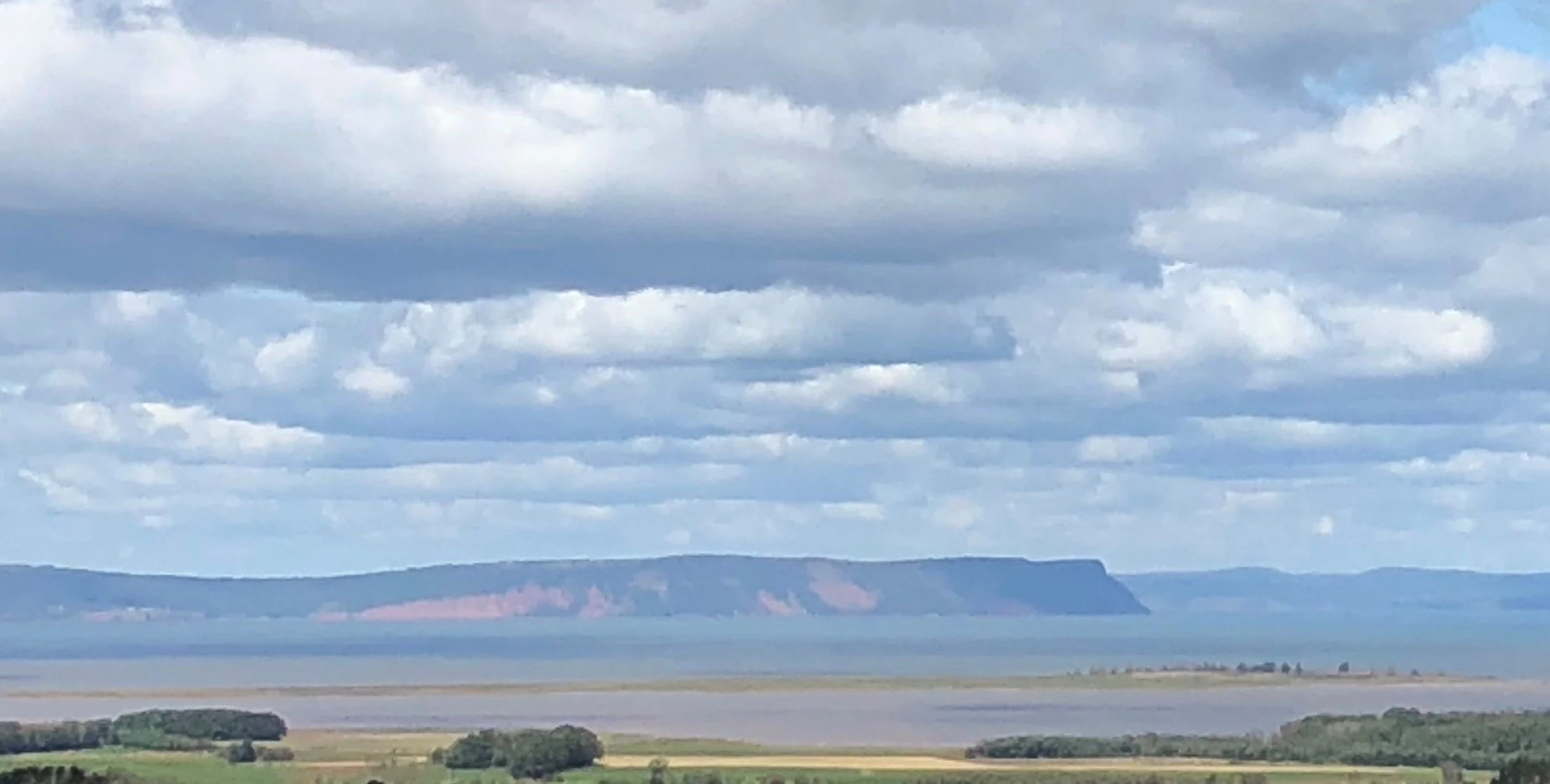
Acadie, or Acadia, was a coveted, verdant land that lay strategically at the entrance to French Canada. Frst settled in 1604 by French-speaking Catholics, Acadie eventually encompassed the present-day provinces of Nova Scotia (including Cape Breton), New Brunswick, and Prince Edward Island.
In 1755, the British governor of Nova Scotia undertook a massive effort to remove every Acadian—man, woman, and child—from the entire region. In my historical novel, Desolate Harvest, I explore what life must have been like for Acadians in the months leading up to Le Grand Dérangement, as they grappled with an ever-increasing threat from an implacable foe.
On this site, I invite you to walk the path of my ancestors—their culture, customs, and challenges—as I share excerpts from my book. I’ll also sprinkle in some enticing facts about 18th century life.
Desolate Harvest can be purchased through retailers worldwide, including Amazon and Barnes & Noble.
“All of this was home. The fields and the timeless way the men worked them, the industry of the women, the toll of the Angelus bell, the brisk breeze from the basin. I could envision, as if they were tangible, the cords of kinship that bound me to every single soul. Family was more than a collection of relations. It was an interwoven fabric of alliances and experiences and obligations to be honored and cherished. It was a person’s place in the world. I felt all of that embrace me and flood my heart with warmth.”
from Desolate Harvest
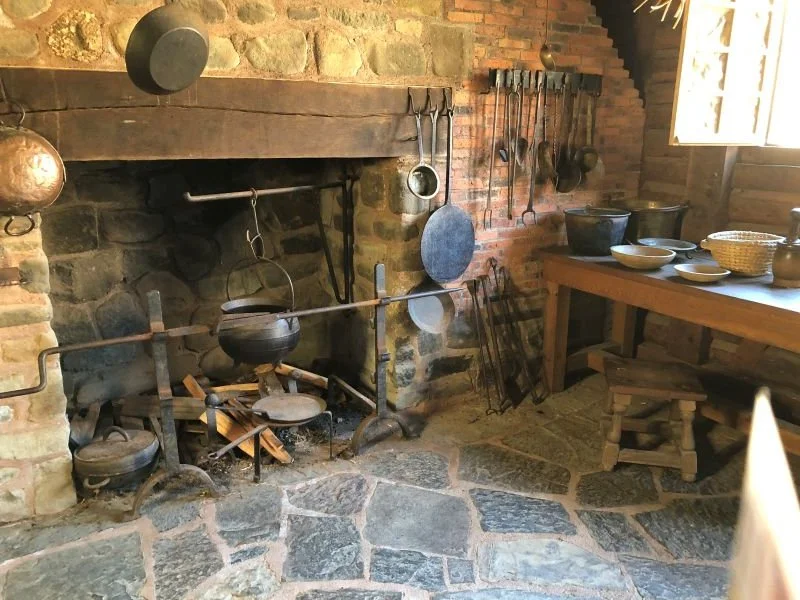
Port-Royal National Historic Site
In the Acadian home, the cuisine was the center of family life. It provided warmth, and made a splendid gathering place for family and friends. Over the open fire, women cooked their savory fricots (fish stew) and plogues (pancakes) and other hearty meals.
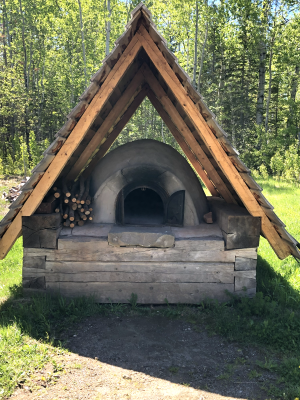
For baking, they fired up outdoor ‘beehive ovens’ like the one shown here. They shaped the dough on the kitchen table, then let it rise in a tapered, standing wood box, appropriately called a dough box. When it was ready—into the ovens it went!
Indoors or out, the cook fire required careful attention, since temperatures weren’t regulated at the turn of a dial.
Because Acadian habitations often consisted of inter-related households, I imagined the ovens in Desolate Harvest as clustered and shared, making them the perfect setting for women to gather and visit while they checked on their breads and pies.
Village Historique Acadienne Caraquet, NB
And Did You Know . . .
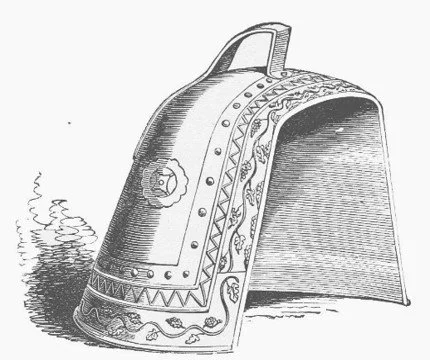
The hearth is responsible for a modern word that has nothing to do with heating or cooking. In the Old World, hearth fires were often left to burn themselves out overnight. Chimneys threw sparks, with predictable results in towns built mostly of wood. Authorities began ordering that fires be put out at a certain hour, and rang the town bell every night as a reminder. To preserve precious embers until morning, housewives banked them and covered them with a utensil called a couvre-feu, as Josette does in Chapter 3. The one shown here is very ornate. Most were made of tin or ceramic, with holes to let the oxygen in.
Over time, the French couvre-feu morphed into curfew in English, for the bell that rang at night.
“Bénédict found himself both dreading the coming fight and wishing it would finally begin, if only to relieve the anxiety of waiting. . .He crept out of the chamber and climbed up to the walkway, where he stole past sleeping gunners, stopping on the curtain wall that faced the river. Even at that hour, the enemy fort was alive with preparations. All along the plateau, distant silhouettes worked by torchlight, securing artillery to carriage frames, packing the baggage train, passing in and out of the sally ports. Soldiers offloaded a steady stream of provisions from ships that hovered like wraiths in Chignecto Bay. . . Heart pounding, he leaned his forearms on the top of the parapet, as fascinated by the sight as he was unnerved by it.
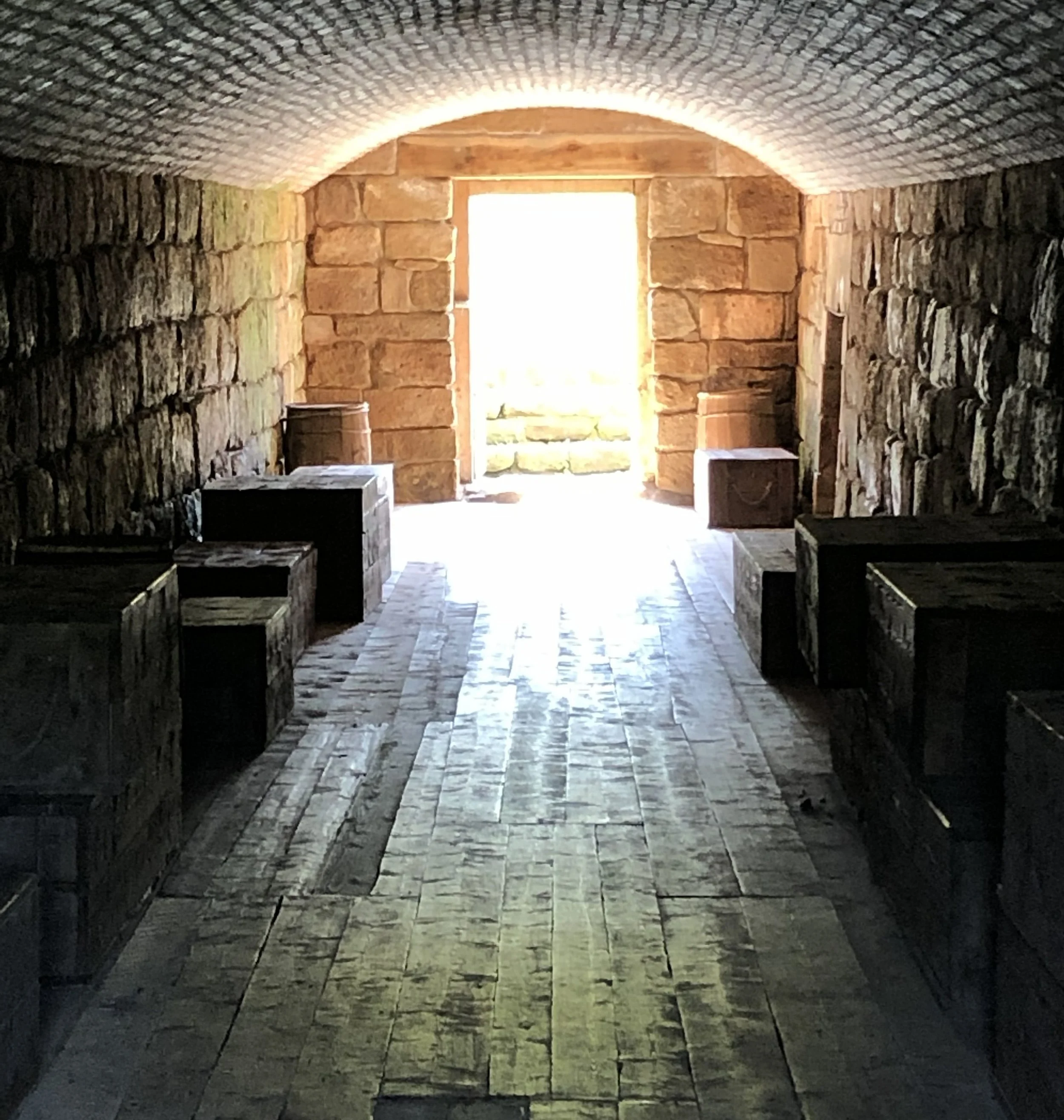
Casemate, a fortified storage area built into Beauséjour’s thick walls
In the spring of 1755, Great Britain launched a four-pronged attack on French interests in the New World. One was a complete disaster, resulting in the death of General Edward Braddock and hundreds of his men, in the wilds of western Pennsylvania. Another was a virtual draw; although the British took a French fort at Lake George in present-day New York, the French simply built another one on Lake Champlain. A third planned attack was postponed to later in the war.
Their only outright success that year came at Beauséjour, an undermanned French outpost on the isthmus between British Nova Scotia and French Canada.
In Desolate Harvest, Bénédict rushes to help defend Beauséjour, eager for adventure, only to find himself embroiled in something far more dangerous.
Beauséjour must have been miserable duty for the regulars. The barracks were below ground level, allowing rainwater and mud to seep in. Diseases of all kinds were rampant. Meals were unvarying, and food was often scarce. The only ‘entertainment’ available was at taverns on the marsh separating Beauséjour from Fort Lawrence, its British counterpart in Acadie.
In those taverns, spycraft ran rampant. In fact, the French commandant’s own secretary, a scoundrel named Thomas Pichon, was a spy for the British, betraying the French, the Acadians, and the indigenous Mi’kmaq. Everything Commandant de Vergor wrote or said went straight across the marsh to the enemy!
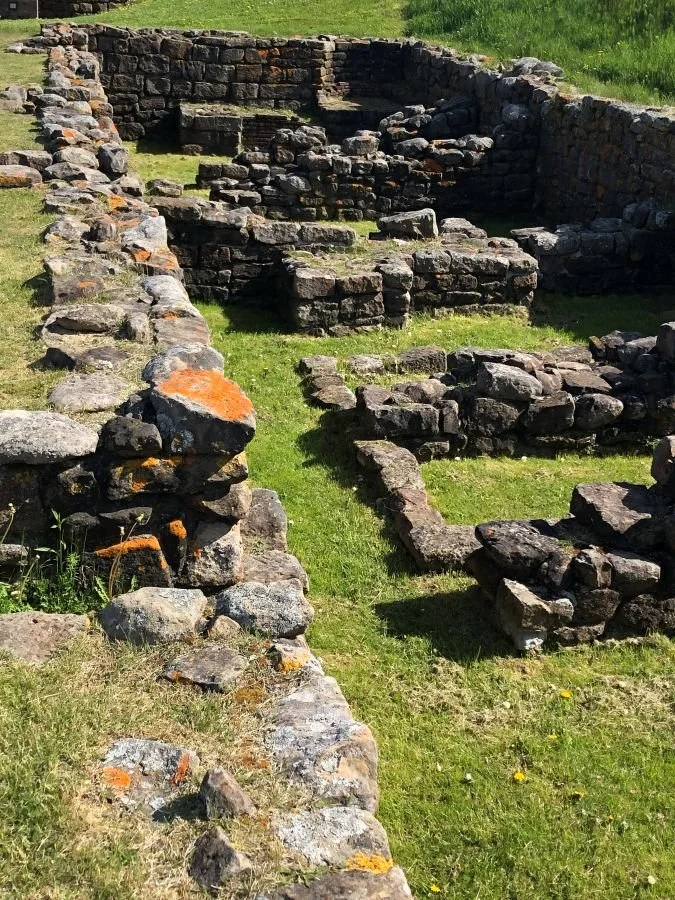
Ruins at Beauséjour
And Did You Know . . .
The defenders of Beauséjour received no support from either Québec or from Louisbourg, the great French citadel on Cape Breton. Why? First, because the British planned their siege well. They blockaded Louisbourg, preventing communication with Beauséjour. Second, because Québec was in the throes of a regime change. A corrupt and incompetent governor was replaced, but his replacement didn’t arrive until a few days after Beauséjour fell.